(302) 262 8484
The Man Who Threw Away a Hard Drive Worth Millions: The $800M Dumpster Disaster

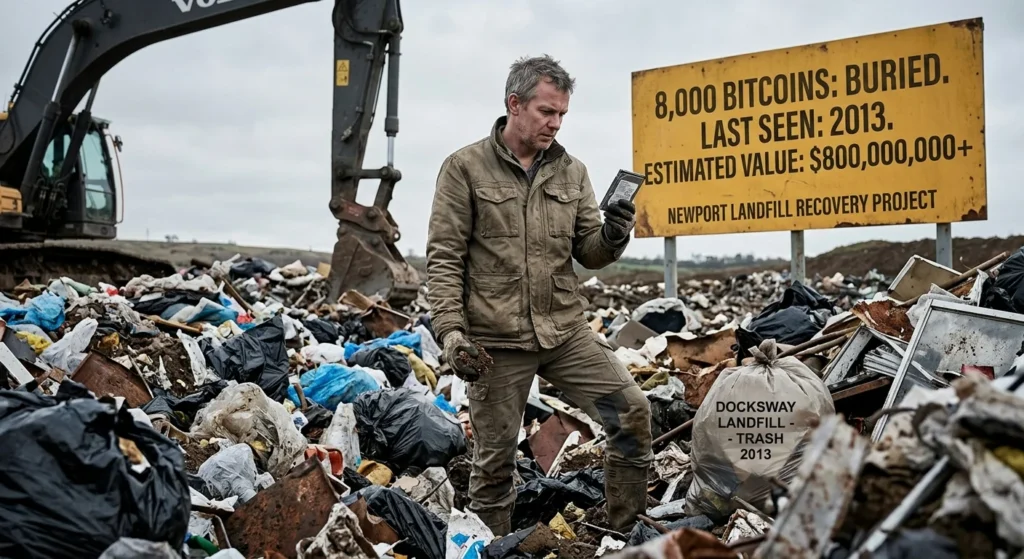
In 2013, a Welsh IT engineer named James Howells accidentally threw away a hard drive worth millions. What started as a standard home cleanout turned into one of the most expensive errors in technology history. Today, that small piece of hardware sits buried beneath tens of thousands of tonnes of compacted trash, holding the private key to 8,000 Bitcoins.
How an Accidental Cleanout Created an $800 Million Disaster
In 2009, when cryptocurrency was still an obscure internet experiment, James Howells mined 8,000 Bitcoins using his personal laptop. He stored his unique private key on an unencrypted 2.5-inch hard drive, placed it in a desk drawer, and eventually forgot about it, a common mistake that highlights why you should always rely on professional IT consulting for secure data management.
During the summer of 2013, Howells was clearing out his office space. He had two identical hard drives resting in the same drawer. One was completely empty, and the other contained his cryptocurrency.
During a miscommunication, the bag holding the wrong drive ended up at the local Docksway landfill in Newport, South Wales. By the time Howells realized the mistake, the trash bag was already buried deep beneath fresh layers of waste. At that moment, those 8,000 Bitcoins were worth around $800,000. Today, that digital fortune is valued at well over $700 million.
The 12-Year Quest to Dig Up Newport Landfill
Because of how cryptocurrency works, anyone can look up the wallet address online and see the funds on the blockchain. Without the specific private key, however, those coins are permanently locked away, underscoring the critical importance of small business cybersecurity protection for anyone handling sensitive digital assets.
Howells refused to walk away from his funds. Over the last decade, he built a dedicated team of engineers, data recovery specialists, and financial backers to orchestrate a recovery plan. His proposed search operation relies on AI-powered sorting conveyers, automated scanning systems, and specialized excavation units.
To win over local authorities, Howells put forward several massive proposals:
- A 30 percent split: He pledged to share up to 30 percent of the recovered coins with the Newport council and local community initiatives.
- Direct infrastructure funding: He offered tens of millions of pounds upfront to construct new community facilities and green energy projects.
- Buying the dump outright: When council officials expressed plans to cap the site, he offered to purchase the entire landfill property directly.
Why City Officials Refuse to Allow an Excavation
Rejecting an offer that could fund the town comes down to liability. Digging up an active landfill is a massive logistical and environmental hazard.
The Newport City Council has consistently blocked every request to excavate the Docksway site, citing critical safety concerns:
- Risk of releasing dangerous methane gas and toxic leachate into local waterways.
- Unearthing hazardous industrial materials like asbestos buried decades ago.
- Severe financial liability if an environmental disaster occurs during digging.
The legal battles culminated when UK High Court judges dismissed Howells’ claims, ruling that garbage dumped into a municipal landfill automatically becomes the legal property of the council. That ruling effectively shut down his legal options to dig.
Can Data Survive 12 Years Under Compacted Trash?
Even if Howells gains physical access to the dump, data recovery experts remain deeply skeptical. The drive has spent over twelve years trapped underneath more than 100,000 tonnes of rotting trash, exposed to heavy compaction, moisture, and extreme heat.
Data restoration specialists note that if the internal drive platters remain unbroken, a specialized laboratory might still read the data sectors. However, after more than a decade in a corrosive underground environment, there is a very high chance the drive is completely ruined.
What the Lost Hard Drive Teaches Us About Security
For anyone managing their own cryptocurrency, this lost hard drive illustrates the strict realities of self-custody.
When you hold your own digital assets, you function as your own personal bank. That complete control gives you absolute freedom, but it also places full responsibility on your shoulders. There is no customer support line to call if you throw your keys in the rubbish bin.
If you want to secure your own digital assets safely, see our guide on [crypto cold storage best practices].
Essential Tips for Safeguarding Digital Wealth
- Use metal backups: Stamp backup seed phrases into durable stainless steel or titanium plates that survive heat and physical damage.
- Label hardware clearly: Never leave spare storage drives or cold wallets unlabelled in shared household drawers.
- Keep redundant copies: Maintain multiple secure backup locations for critical private keys to prevent single points of failure.
James Howells may never recover his lost hard drive from the Newport landfill, but his multi-million dollar mistake remains a clear lesson in the importance of secure data management.