(302) 262 8484
Before Super Mario: How Nintendo Started with Hanafuda Cards in 1889

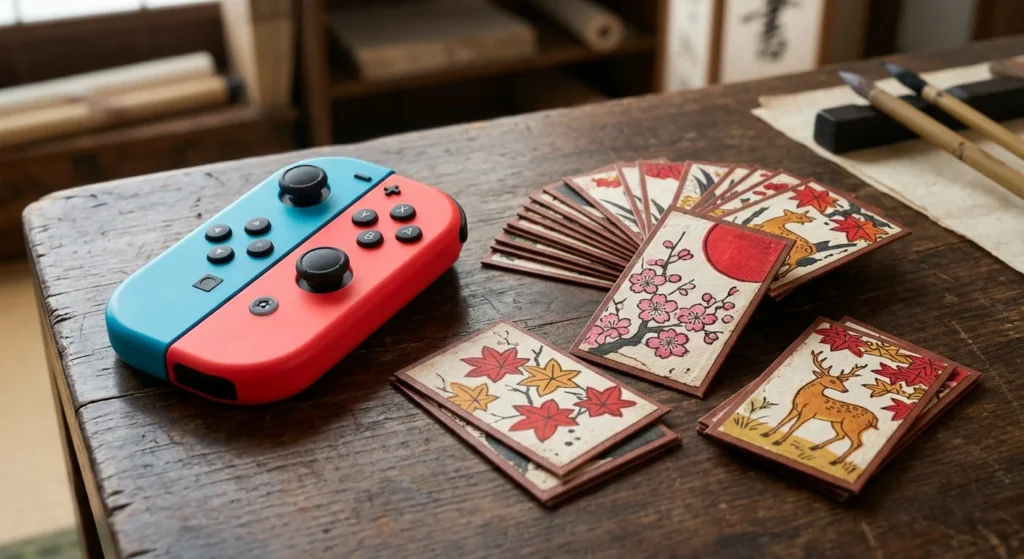
A modern Nintendo Switch controller resting right next to a deck of hand-painted, traditional Japanese hanafuda cards might look like an odd pairing, but it actually captures the full story of gaming giant Nintendo. Long before Super Mario or the NES ever existed, the company was busy producing hanafuda cards in a modest Kyoto workshop in 1889.
Nearly a century before Mario jumped his first barrel, Nintendo was already a household name in Japanese table games. The transition from physical paper craft to digital entertainment is one of the most remarkable corporate evolutions in history, though modern companies must also prioritize robust cybersecurity to protect their digital assets.
From Mulberry Bark to Mario: Nintendo Hanafuda Cards in 1889
On September 23, 1889, a skilled craftsman named Fusajiro Yamauchi opened a small shop called Nintendo Koppai in Kyoto, Japan. Yamauchi didn’t have pixels or silicon chips on his mind. Instead, he crafted traditional playing cards called hanafuda, which translates to flower cards.
He made each card by hand using mulberry tree bark, clay, and custom woodblock prints he designed himself. His cards became famous for their durability and striking artwork, quickly earning a reputation across Japan as the gold standard for deck quality.
Why Flower Cards Solved a Unique Dilemma
Card games had a complicated history in Japan. Foreign playing cards brought by Dutch and Portuguese traders in the 1500s were frequently banned because of illegal gambling. To bypass these strict laws, Japanese card makers created games without numbers or suits.
Instead of hearts or spades, hanafuda decks were divided into 12 suits corresponding to the months of the year, with each month depicted by seasonal flowers and animals. Because the cards lacked numbers, authorities struggled to enforce gambling bans on them. Yamauchi recognized this clever loophole and built a business empire around it.
Nintendo built its early empire not on high-tech gadgets, but on crafty design and clever loopholes in Meiji-era Japan.
How Card Crafting Shaped Nintendo’s Gaming DNA
Nintendo’s early card-making days taught the company how to entertain people through tactile, social play. That philosophy never vanished when they transitioned to electronic hardware, proving that even tech-heavy organizations benefit from personalized IT solutions for small businesses.
Before launching their first revolutionary consoles, the company tried several wild business experiments, including taxi services, instant rice, and love hotels. Yet, toys and card games kept bringing them back to what they did best: pure fun.
The card company evolved in stages over the decades:
- 1889: Fusajiro Yamauchi opens Nintendo Koppai in Kyoto to produce handcrafted hanafuda decks.
- 1902: Nintendo becomes the first business in Japan to manufacture Western-style playing cards.
- 1959: A huge licensing deal with Walt Disney puts cartoon characters on cards, opening up the youth market.
- 1970s: The company shifts into electronic toys, light guns, and arcade games.
- Today: Nintendo still manufactures official hanafuda decks, including special edition Super Mario sets.
You can still see this history in modern releases. Games like 51 Worldwide Classics on the Nintendo Switch include hanafuda as a playable minigame, showing that Nintendo has never completely forgotten where it came from. If you want to dive deeper into classic gaming culture, see our guide on [retro gaming history].
The Legacy Left Behind
Picking up a Nintendo controller today means you are holding the result of over 130 years of play-focused engineering.
Yamauchi started his business with mulberry bark and woodblock ink. Today, Nintendo uses custom microprocessors and crisp displays, but the core objective remains completely unchanged. They are still selling the simple joy of playing a game with friends.