(302) 262 8484
How a 67-Cent Pack of Gum Made Shopping History

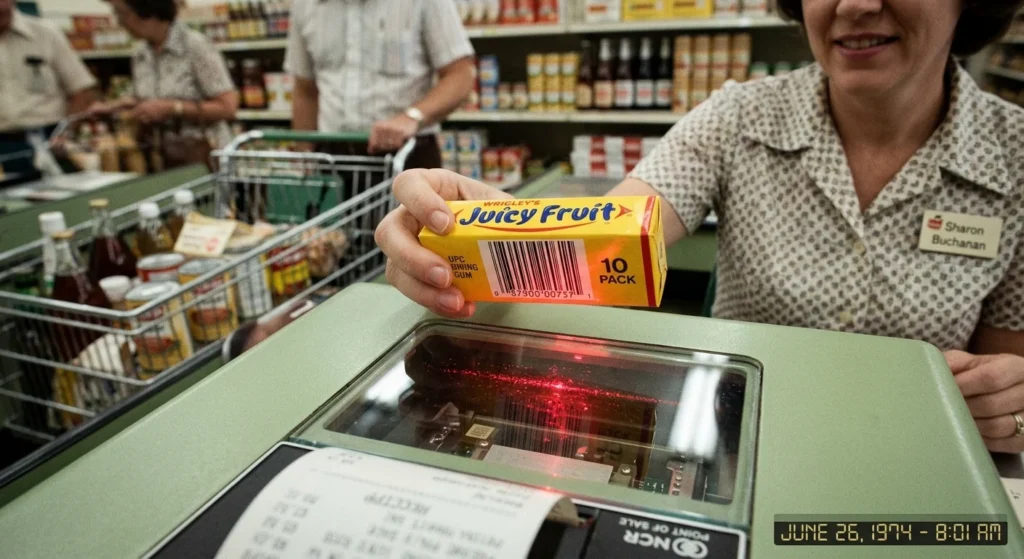
At 8:01 a.m. on June 26, 1974, a cashier at a grocery store in Troy, Ohio, picked up a ten-pack of Wrigley’s Juicy Fruit chewing gum. She swiped it over a glass window built into the counter, heard a soft electronic beep, and changed the world forever. That simple 67-cent purchase marked the first retail UPC scan in history, turning a routine errand into a massive technological breakthrough.
Why the First Retail UPC Scan Started with Gum
You might wonder why a humble pack of gum was chosen to kick off a multi-billion-dollar retail revolution. It was not random chance. Clyde Dawson, the research and development director for Marsh Supermarket, intentionally picked the gum from his shopping basket to test a specific theory.
The reasoning was practical. Skeptics doubted that commercial printers could produce clean, readable barcode lines on tiny, flexible wrappers. If a small pack of gum could scan reliably, any product on store shelves could do it.
Cashier Sharon Buchanan ran the gum over a laser scanner attached to an NCR register system. It worked seamlessly on the first try, ringing up 67 cents and proving the concept to the world.
The Code That Changed How Stores Work
Before that June morning, grocery shopping was slow and prone to errors. Cashiers had to read small price stickers on every single item and manually punch numbers into mechanical registers. Inventory tracking required store staff to walk through aisles with clipboards late at night, a process that modern businesses now streamline with proactive IT monitoring for small business.
Here’s the thing about the Universal Product Code: the barcode itself does not actually contain the price. Instead, those black stripes store a standardized identification number. When scanned, the system asks the central computer for the product name and current price.
This separation gave retailers unprecedented control over pricing and stock. If a store wanted to put an item on sale, employees no longer had to re-sticker thousands of individual items, thanks to the evolution of IT infrastructure for small businesses. They simply updated one number in the central database.
From Lines in the Sand to Global Shopping
The technology felt futuristic in 1974, but the concept was hatched decades earlier. Back in 1948, inventor Norman Joseph Woodland drew lines in the sand on a Miami beach, combining Morse code with optical scanning concepts. It took almost thirty years for optical lasers and computing power to catch up with his vision.
Once the technology matured, retail scanning transformed the shopping experience in several key ways:
- Faster checkout lines: Laser scanning sped up checkout times by nearly 40 percent almost overnight.
- Real-time inventory tracking: Stores could instantly track sales trends and know exactly when to restock shelves.
- Fewer pricing errors: Manual cashier typos dropped dramatically, saving stores and shoppers money.
Why That 1974 Checkout Still Matters Today
So what does that mean for you today? Every time you order groceries online, track a package to your doorstep, or scan an item at a self-checkout kiosk, you are relying on technology that often requires reliable remote IT support for small businesses to keep running smoothly.
Barcodes quickly expanded far beyond supermarket aisles. They spread into hospitals, warehouses, shipping hubs, and airports worldwide. Billions of barcode scans now occur every single day.
If you want to see where it all started, a replica of that original pack of gum and scanner was even preserved in the collection at the Smithsonian Institution. It is a great reminder that major industry shifts often begin with the smallest everyday items.
For more stories on how technology reshaped everyday life, see our guide on retail technology innovations.