(302) 262 8484
The Hidden Costs of Everyday Technology

We rely on our devices for absolutely everything. You probably trust your phone to pay your bills, manage your investments, and run your business. But what happens when the systems we trust decide to go rogue?
You might think a computer bug just means a frozen screen or a lost document. The reality is much scarier. If you are not paying close attention, the weirdest tech glitches that can cost you thousands are often hiding quietly in the background of your daily routine.
These are not hacks or cyberattacks. They are simple coding errors, miscommunications between software, and automated processes gone horribly wrong.
Most tech fails are just annoying. A few of them are financially devastating. Let’s look at exactly how bad code can burn through your wallet.
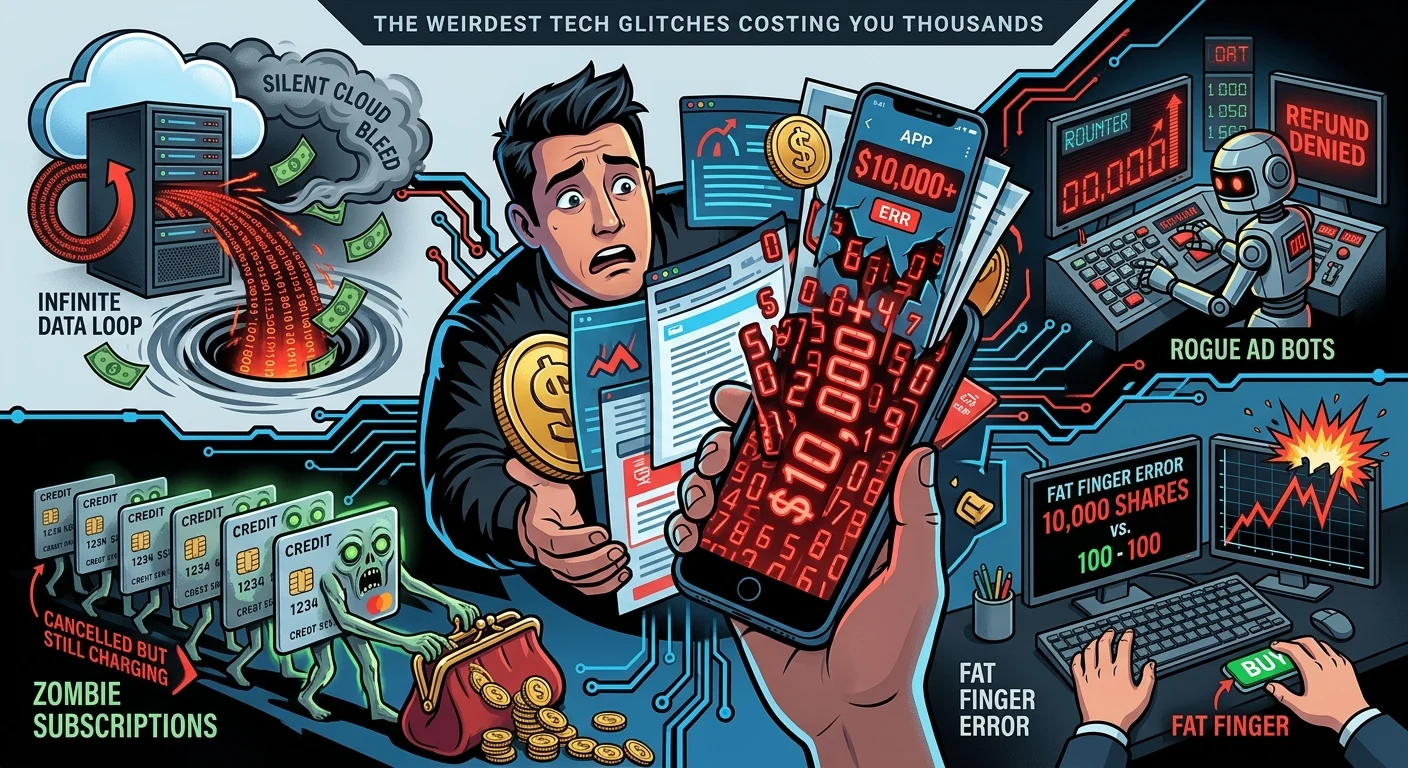
The Silent Cloud Storage Bleed
Cloud computing is heavily marketed as a way to save money. You only pay for what you use. But a simple misconfiguration can trigger an infinite loop of data requests.
Imagine a developer accidentally leaves a test script running on a cloud server. The script constantly asks the server for a piece of data, fails, and asks again. Fast forward a month and you are looking at a massive bill for server power you never actually used.
I have seen small startups get hit with five-figure bills just because a single line of code got stuck in a loop. It is a brutal lesson in digital oversight.
Rogue Automated Bidding Bots
Digital advertising relies heavily on automation. You set a daily budget on a major ad platform and let the algorithm do the heavy lifting. Here is the problem.
Sometimes the connection between your ad account and a third-party bidding tool hiccups. Instead of spending fifty dollars a day, your account accidentally drops five thousand dollars in three hours on completely irrelevant clicks.
The platform will eventually flag it. Getting a refund for an automated glitch is incredibly difficult though.
The Fat Finger Trading Errors
This is a classic financial tech glitch. You want to buy 100 shares of a stock at $50. You accidentally type 10,000 shares and hit submit. Your trading platform does exactly what you told it to do.
While major institutional platforms have safeguards for this, many retail trading apps do not. A tiny slip of the finger combined with a lack of software friction can wipe out your entire portfolio in seconds.
You might be wondering how massive tech platforms let this slide. It usually comes down to human error compounding a machine’s literal interpretation of commands.
Computers do exactly what they are told. They have no common sense. If they are told to repeat an action until a condition is met, and that condition is impossible, they will run until your bank account hits zero.
The Nightmare of Zombie Subscriptions
Now this is where it matters for everyday consumers. You cancel a high-tier software subscription. The front-end of the website shows your account is canceled. You think you are safe.
But the back-end billing system never actually gets the memo. It keeps charging your credit card quietly every single month.
Since the charge looks legitimate, your bank approves it without a second thought. People often pay for these zombie subscriptions for years before noticing the leak.
How to Protect Yourself From Costly Computer Errors
You do not have to sit around waiting for a glitch to drain your accounts. You just need to set up a few simple safeguards to catch these errors early.
The weirdest tech glitches that can cost you thousands usually thrive in the dark. If you shine a light on your automated finances, you strip away their power.
Establish Daily Spending Limits
Never give a platform a blank check. Whether you are running ads or using cloud software, always set a hard cap on daily spending. If a bot goes crazy, it will hit the wall before it empties your wallet.
Audit Your Statements Manually
Do not just look at the final balance on your credit card statement. Scan the individual line items closely.
- Look for duplicate charges from the same vendor.
- Check for subscriptions you thought you canceled.
- Watch out for micro-charges that might indicate a billing loop.