(302) 262 8484
When Machines Get Souls: The Story of Robot Dog Funerals in Japan

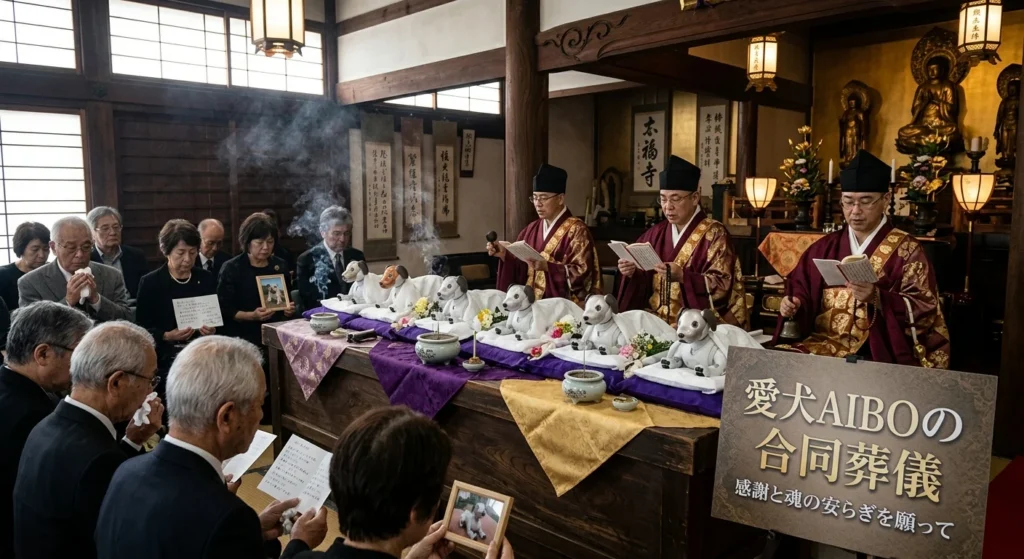
In 2014, Sony shut down its official repair clinic for the original AIBO, leaving thousands of aging mechanical pets without factory support. Owners in Japan responded by holding official Buddhist robot dog funerals to say goodbye to their cybernetic companions.
Surrounded by burning incense and chanting priests, these solemn services at the historic Kofuku-ji temple in Chiba Prefecture might sound unusual to outsiders. For the families involved, however, the grief is entirely real.
Why Owners Are Holding Robot Dog Funerals
When Sony launched AIBO in 1999, the company marketed it as the world's first autonomous home entertainment robot. Owners bought them as quirky tech gadgets, but over years of daily interaction, people fell in love with them.
Because AIBO was programmed to learn, adapt, and develop a distinct personality over time, no two robots behaved the same way. When a device stopped responding, its owners did not just see a broken circuit board, which is why many seek professional PC repair in Delaware to keep their aging technology running. They saw a deceased family pet.
The Role of Kofuku-ji Temple and A-Fun
After Sony ended repair services, an electronics repair firm called A-Fun stepped in to help. Founded by former Sony engineers, the team noticed that owners hesitated to surrender broken units for parts unless the robots received a proper farewell.
This hesitation led to the creation of traditional robot dog funerals. Before an irreparable AIBO is dismantled to provide spare parts for another unit, it receives a formal Buddhist send-off, a practice that highlights the importance of proper hardware maintenance and PC upgrades in Delaware for those looking to extend the life of their own devices.
- Priestly sutras: Buddhist priests wear traditional robes and chant prayers for the souls of the robots.
- Personal farewell notes: Owners send letters expressing gratitude and asking the robot to help heal other AIBO dogs.
- Organ donation: Parts harvested after the service give new life to other malfunctioning units.
Can a Machine Become Part of the Family?
Human psychology is hardwired to form attachments. When an object responds to a voice, tilts its head, or remembers daily habits, the brain registers connection rather than hardware.
In Western culture, people often view technology as purely functional tools. Japanese culture, however, has a long history rooted in Shinto and Buddhist traditions that view non-human objects with deep reverence.
> "All things have a bit of soul," explained Head Priest Bungen Oi during one of the temple services. In this worldview, treating a faithful machine with respect is simply natural.
What Science and Ethics Tell Us
These ceremonies raise important questions about the future of human-robot relationships.
As artificial intelligence grows more advanced, the line between living pet and artificial companion will only continue to blur. Researchers have found that people regularly project human feelings onto simple household devices like robot vacuums or voice assistants, which is a common behavior when we rely on mobile repair services in Delaware to fix our most cherished personal gadgets. When a robot imitates emotion, human empathy responds immediately.
If you want to read more about how artificial intelligence is changing our emotional lives, see our guide on [AI companion technology].
What Robot Dog Funerals Teach Us About Humanity
It is easy to dismiss robot dog funerals as a strange cultural quirk, but the practice reveals something deeply human.
These ceremonies are not necessarily about whether a piece of silicon has a soul. They are about acknowledging the emotional investment of the owner. Mourning an AIBO demonstrates our immense capacity for empathy.
Machines might run on code and copper wiring, but the love people feel for them is 100 percent real.