(302) 262 8484
The 60-Second Hack: How Cybercriminals Smash Through 2FA

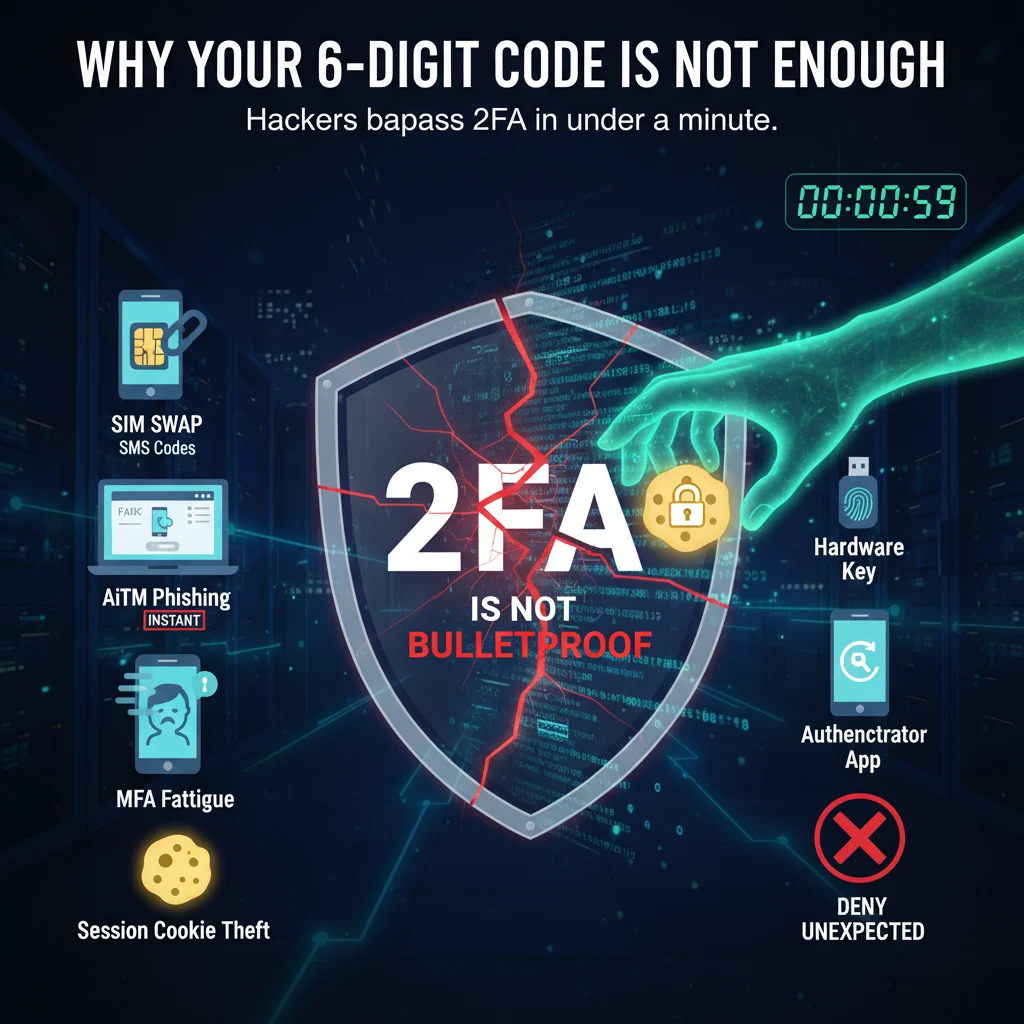
Most people think turning on 2FA means their accounts are bulletproof. They are not. If you want to know how hackers bypass two-factor authentication almost instantly, the truth might keep you up at night. It takes less than a minute for a skilled attacker to slip past that six-digit code you rely on.
Why Your Six-Digit Code Is Not Enough
Two-factor authentication is absolutely necessary. You should never turn it off. But relying on it as your only line of defense is a massive mistake. The security landscape changes fast, and small business owners need reliable Small Business Cybersecurity Protection to keep up with evolving threats. Attackers do not sit around trying to guess your passwords anymore. They steal your access directly.
Exactly How Hackers Bypass Two-Factor Authentication
There are a few clever ways cybercriminals get around extra security layers. Some take days of planning. Others happen in real time while you are staring at your screen.
The Instant Threat of AiTM Phishing
Adversary-in-the-Middle attacks are terrifyingly fast. You get an email that looks exactly like a login warning from Google or Microsoft, a common tactic often discussed in our guide on Why People Lose Access to Their Accounts Every Day. You click the link and enter your password. Then the page asks for your 2FA code.
You type it in. You think you are safe.
Here is the problem. You did not log into the real site. You logged into a proxy server controlled by the attacker. The moment you type that code, the proxy forwards it to the real website, logs in, and steals the session cookie. They bypass two-factor authentication instantly and lock you out before you even realize what happened.
Stealing Your Session Cookies
This is another incredibly common method. Think about how you stay logged into your favorite websites for weeks at a time. That happens because your browser saves a session cookie.
If malware gets onto your computer, hackers do not need your password or your 2FA code. They just steal that cookie. Once they drop it into their own browser, the website assumes they are you. They are already past the security checkpoint.
The Classic SIM Swap
SMS text messages are the worst form of 2FA. Period.
In a SIM swap attack, a hacker calls your mobile carrier and pretends to be you. They claim they lost their phone and need the number ported to a new SIM card. If the customer service rep falls for it, your phone loses service. Suddenly, every single 2FA text message goes straight to the hacker.
MFA Fatigue and Prompt Bombing
Hackers know humans get tired. If they have your password, they might just spam your phone with login approval requests at two in the morning.
Your phone buzzes twenty times. You wake up groggy and annoyed. You hit approve just to make it stop. That is all it takes. The attacker is inside.
How to Lock Down Your Digital Life
You cannot stop hackers from trying. But you can make their job so difficult that they give up and move on to an easier target.
Here are the best ways to upgrade your security:
- Ditch SMS codes: Use an authenticator app like Authy or Google Authenticator. They generate codes locally on your device, making them immune to SIM swapping.
- Invest in a hardware key: Security keys like YubiKey are the gold standard. They require physical touch to approve a login. AiTM phishing attacks cannot steal a physical tap.
- Never approve unexpected prompts: If your phone asks you to approve a login you did not initiate, deny it immediately and change your password.
- Watch out for urgent emails: Phishing thrives on panic. Take a breath before clicking links in emails claiming your account is suspended.
Staying One Step Ahead
Security is not something you set and forget. The tactics used to bypass two-factor authentication evolve every single day.
Upgrading to an authenticator app or a hardware key takes about ten minutes. That short amount of time could be the difference between keeping your data safe and dealing with a stolen identity. Take a hard look at your accounts today and make the necessary changes.