(302) 262 8484
Understanding What a Data Breach Is and How to Tell If You’re Affected

It seems like every other week a massive company announces that hackers stole millions of user records. If you are wondering what a data breach is and how to tell if you’re affected, you are definitely not alone. It is a stressful situation that leaves you wondering if your bank account is about to be drained or your identity stolen.
Let’s cut through the technical jargon. We will look at exactly what happens during these security incidents and the clearest signs that your personal information is in the wrong hands.
So, what exactly is a data breach?
At its core, a data breach happens when unauthorized people gain access to secure, private, or confidential information. Think of it like a burglar breaking into a digital filing cabinet.
Hackers might steal a variety of sensitive details during these attacks.
- Email addresses and phone numbers
- Usernames and passwords
- Credit card numbers and bank details
- Social Security numbers
Sometimes the company itself accidentally leaves a server unprotected. Other times, cybercriminals use sophisticated malware to break in. Either way, your data ends up exposed and usually gets sold on the dark web.
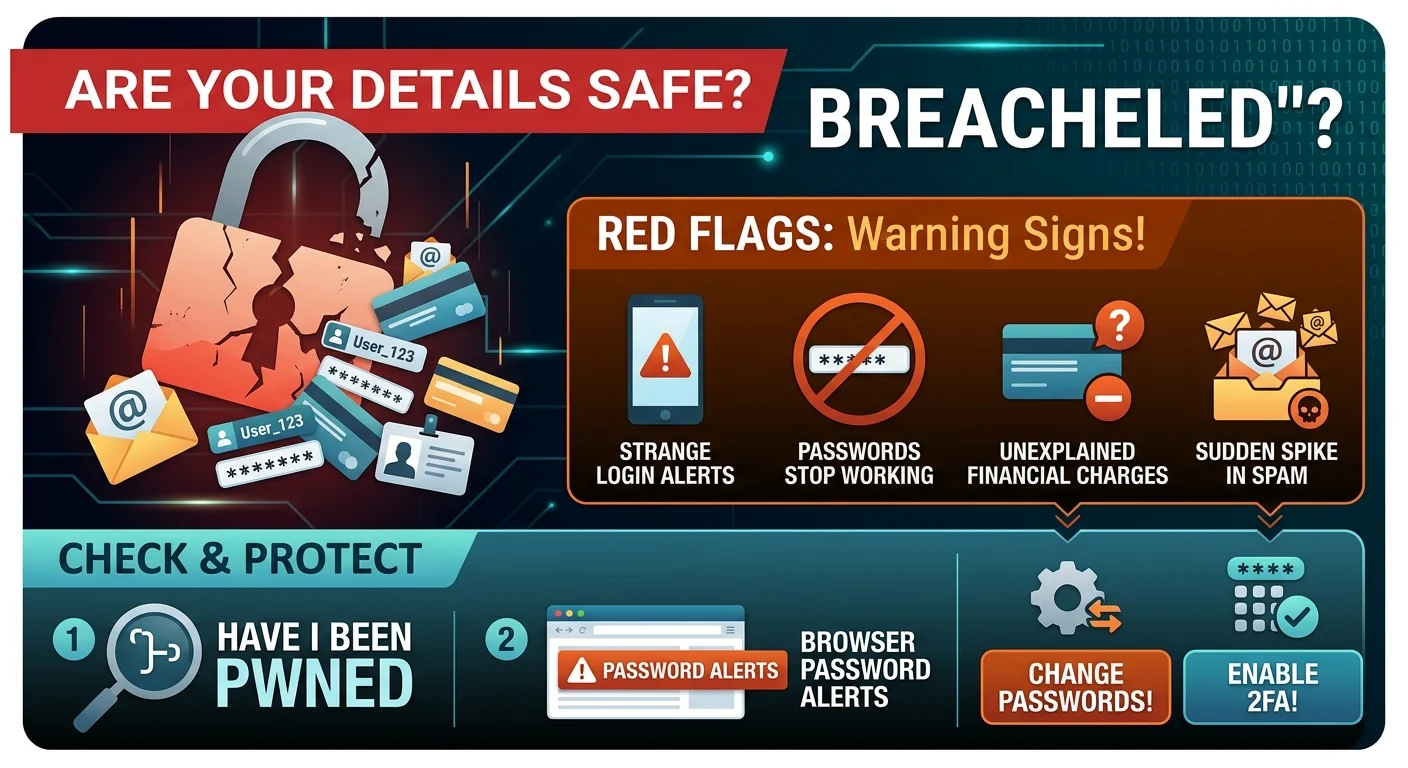
Red Flags: How to Tell If You Are Affected by a Data Breach
You do not always get a polite email from a company telling you your data was stolen. In fact, companies often take months to realize they were even hacked. That means you need to be proactive.
Here are the biggest warning signs that your information was compromised.
You receive strange login alerts
Most modern apps send you an email or text when someone logs in from a new device. If you wake up to a notification that someone just signed into your streaming account from another country, that is a massive red flag. Your credentials were likely leaked.
Your passwords stop working
This is usually the scariest sign. You try to log into an account you use every day, but your password fails. You try again. Still nothing. Hackers will often change your password immediately after gaining access, which is why understanding how someone can lock you out of your own computer is so important.
Unexplained financial activity
Check your bank and credit card statements regularly. Hackers often test stolen credit cards with tiny purchases. We are talking about a random two dollar charge at a gas station halfway across the country. If that goes through, they will move on to draining the account.
A sudden spike in spam
If your inbox suddenly floods with junk mail or highly specific phishing attempts, your email address was probably part of a recent leak. Scammers buy massive lists of stolen emails and blast them with malicious links hoping you will click on one.
The Best Tools to Check If Your Data Was Leaked
You do not have to sit around waiting for bad things to happen. There are reliable ways to check if your data is floating around online.
Use Have I Been Pwned
This is the gold standard for checking data leaks. It is a free tool run by a respected security researcher. You just type in your email address or phone number. The site instantly tells you if your information was found in any known breaches.
Check your built-in browser alerts
Google Chrome and Apple Safari both have built-in password monitoring. If you save your passwords in your browser, they will actively warn you if one of those passwords appears in a public data leak. Do not ignore those popups. They are incredibly accurate.
What to Do Next If Your Information Is Compromised
Finding out your information was stolen is frustrating. But panicking will not fix it. You need to take action quickly to limit the damage.
Change your passwords immediately
Go to the affected site and change your password right away. If you reuse that same password on other sites, you need to change those too. This is exactly why using a password manager is the smartest move you can make online.
Set up two-factor authentication
Also known as 2FA, this adds a second step to your login process. Even if a hacker has your password, they cannot get into your account without the special code sent to your phone. Turn this on for your email, bank, and social media accounts.
Freeze your credit
If you suspect your Social Security number or deep financial details were leaked, freeze your credit. It is free to do with the three major credit bureaus. A freeze completely stops anyone from opening new credit cards or loans in your name.
Staying safe online requires a little bit of maintenance. Keep an eye on your accounts, use strong passwords, and never ignore the warning signs.