(302) 262 8484
What Happened to Screensavers? Why They’re Obsolete Now

The Ghostly Tech That Saved Our Screens
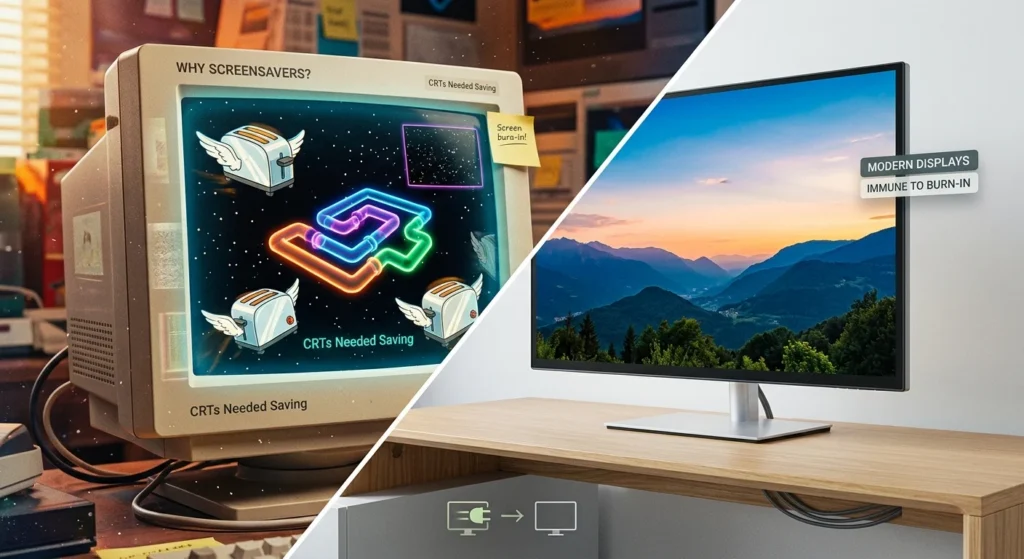
If you used a computer in the 1990s or early 2000s, you probably spent a lot of time watching a 3D maze, a cluster of neon pipes, or flying toasters. Then they vanished. Screensavers went from a desktop necessity to a forgotten relic of the early internet era.
To understand why they disappeared, we have to look at how displays changed. Screensavers are obsolete because modern screens simply do not need saving. In fact, keeping an animation running on a modern monitor does more harm than good.
What Happened to Screensavers? The Death of the CRT
The disappearance ties directly to the end of Cathode Ray Tube (CRT) displays. These heavy, boxy screens worked by firing electrons at a phosphor-coated glass panel. But CRTs had a major design flaw: screen burn-in.
If you left a static image like a Word document or the Windows taskbar on the screen, the electrons wore down the phosphor coating unevenly. Over time, a permanent outline of that image etched into the glass, visible even when the monitor was turned off. Screensavers solved this. By running a constantly moving, colorful animation, they ensured no single pixel stayed lit with the same color for too long.
The Rise of LCD and LED Technology
In the mid-2000s, bulky CRT monitors gave way to Liquid Crystal Display (LCD) and Light-Emitting Diode (LED) panels. Because these flat screens do not use phosphors to emit light, they are structurally immune to the classic burn-in that affected older monitors.
Once LCDs became standard, the functional reason for screensavers disappeared. Running an animation on an LCD screen does not protect it. It actually keeps the backlight active, which shortens the display’s overall lifespan and may eventually necessitate seeking expert PC upgrades in Delaware to restore your monitor’s performance.
Power Management Took Over
Instead of keeping a monitor awake to render 3D graphics, modern operating systems shifted to power management. When you step away from your desk today, the computer puts the display to sleep or blanks the screen entirely. This saves electricity, lowers energy bills, and preserves laptop battery life, which is a key part of the proactive IT monitoring for small business owners who want to keep their hardware running efficiently.
Why Modern Tech Doesn’t Need a Screensaver
While standard LCDs do not need screensavers, display technology has shifted again. Premium monitors and TVs now use Organic Light-Emitting Diode (OLED) panels, which has brought burn-in back into the conversation. Because OLED pixels degrade individually, static elements can eventually leave faint ghost images.
Are Screensavers Ever Useful Today?
Even so, you do not need a 3D pipes screensaver for a new OLED monitor. Here is why:
- Modern safeguards: OLED displays use built-in features like pixel shifting and automatic screen dimming to prevent burn-in without user intervention.
- Sleep mode is still king: The best way to protect any screen is to let it sleep. A blank OLED screen uses zero power, while an active screensaver keeps the pixels lit.
- Performance drain: Complex screensavers consume system resources, using CPU and GPU cycles when the computer should be idle.
For more details on keeping your desktop in top shape, see our guide on [modern monitor technologies].
Aesthetics, Security, and Smart Displays
Screensavers haven’t completely disappeared. Instead, they have shifted into a few specific roles:
- Smart TVs and streaming boxes: Devices like the Apple TV display high-definition aerial footage when idle, serving a purely aesthetic purpose.
- Lock screen security: In corporate offices, screensavers often act as password-protected lock screens to secure sensitive data when employees step away.
- Pure nostalgia: Enthusiasts still download retro screensavers to recreate the classic 90s desktop experience.
Screensavers served a specific hardware purpose. They protected older monitors, provided some entertainment, and became a recognizable part of early personal computing. But today, the most effective screensaver is just a dark screen.