(302) 262 8484
Xbox Disc to Digital: The Ultimate Bridge to a Disc-Free Future?

Physical Discs Are Dying, But Xbox Has a Secret Weapon
Let’s be honest. The physical game disc is basically on life support right now. You’ve probably seen the rumors that Sony wants to phase out physical PlayStation discs entirely over the next few years. The writing is definitely on the wall. But while PlayStation owners are sitting there wondering what’s going to happen to their giant shelves of plastic cases, Microsoft is actually cooking up something pretty fascinating, and it’s a major shift for their IT infrastructure for small businesses and consumers alike. Enter the leaked Xbox disc-to-digital program. It’s a project that could completely change how we think about owning our games.
Think about it. For years, we’ve had to make a tough choice. Do you want the pure convenience of a digital-only console, or do you want the tangible, trade-in value of physical discs? If you bought a disc-free console, your old physical collection instantly turned into a stack of really expensive drink coasters. Xbox’s new initiative—reportedly codenamed “Positron”—is built to bridge that exact gap. So, how does it actually work? And what does it mean for the future of selling your used games?
How This Xbox Disc-to-Digital System Actually Works
Converting a physical disc into a digital license isn’t a brand-new idea. But Microsoft’s take on it is incredibly clever. Based on recent leaks, this system is built to protect the physical library you already paid for, while smoothly moving you over to a fully digital ecosystem.
Here is exactly how the feature is supposed to work step-by-step:
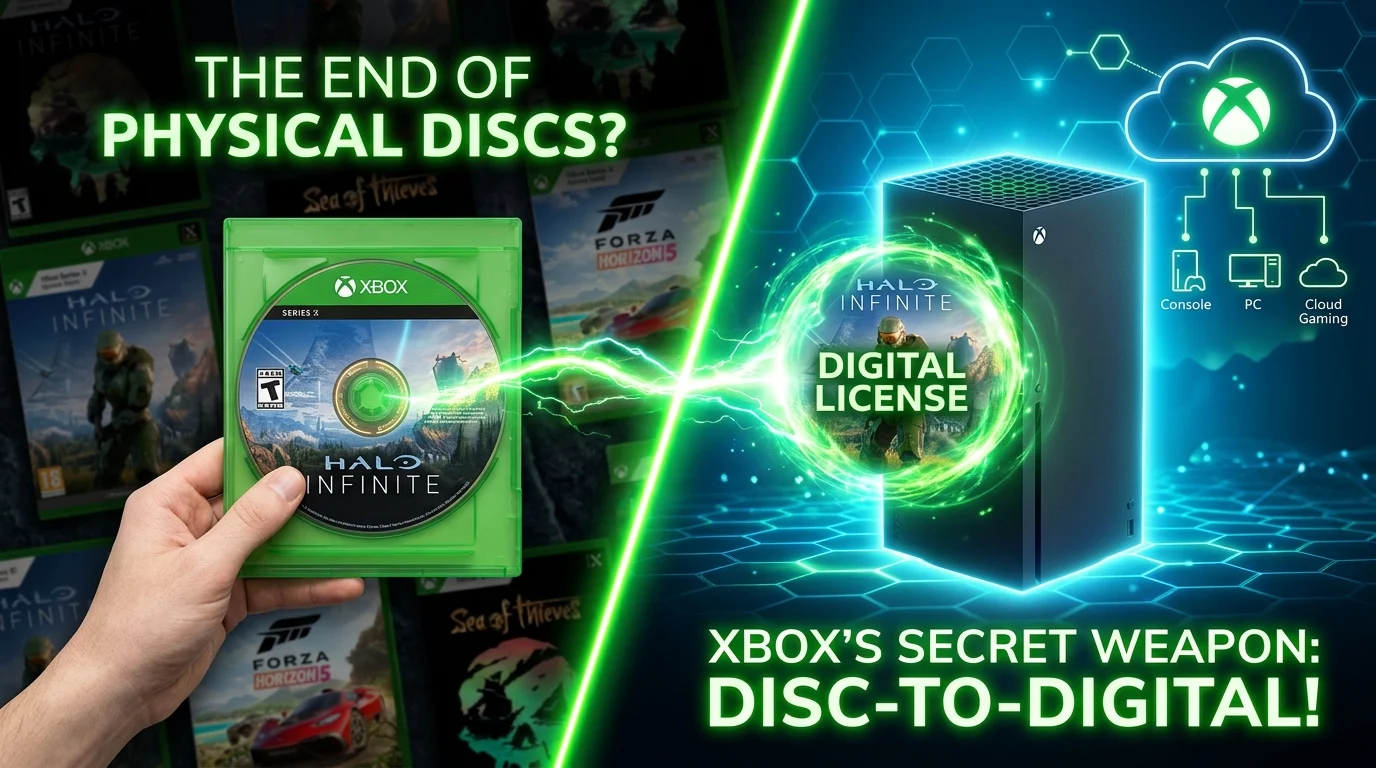
- Insert and scan: You just pop your physical Xbox One or Series X disc into a console that actually has a disc drive.
- License creation: The console reads a unique identifier key right off the disc. Then, it registers a digital license straight to your Xbox account.
- Play disc-free: Once the system verifies it, you’re good to go. You can play that game on any of your Xbox devices—even the disc-less ones—without ever needing to put the plastic back in the drive.
Now, here is where it gets interesting. You’re probably thinking: what stops a guy from scanning a disc, passing it around to ten friends, and getting everyone a free digital copy? Microsoft already saw that coming. Their fix is brilliant. It’s also going to be pretty controversial.
The “One License” Rule and What It Means for Used Games
To stop people from just pirating everything, the digital license stays hard-tethered to the physical disc itself. That means only one active digital license can exist for that specific disc at any given time. Say you decide to sell your game to a local shop. Or maybe you just lend it to a buddy. The exact second they put that disc into their console, the digital license transfers over to them.
So what happens to you? You instantly lose access to your digital copy. The license literally follows the plastic. It turns your digital game into something that behaves exactly like a physical one. This keeps the whole second-hand market alive and well, but still gives you the day-to-day freedom of a digital library.
The Pros: Why This Setup is a Massive Win for Us
If Microsoft actually pulls this off, it fixes a massive headache for backward compatibility. It acts as the perfect bridge if you want to upgrade to a sleeker, disc-free console but refuse to abandon the game collection you spent years building. (By the way, if you are thinking about making that switch, you should check out our guide on [choosing the right Xbox console]).
Here are the biggest perks of the new system:
- Future-proofing: You get to carry your physical library right over to future hardware that won’t even have a disc drive.
- Resale value: Unlike standard digital downloads, you can still sell, trade, or lend your games. The physical disc keeps its actual cash value.
- Total convenience: No more getting off the couch to swap plastic discs every single time you want to switch from Halo to Forza.
- Cross-device play: You can play your scanned games across other compatible setups, including your PC and cloud gaming.
The Cons: Where This System Could Fall Apart
Here’s the catch. As great as all this sounds, it isn’t a perfect system. There are a few major speed bumps that might really frustrate hardcore collectors and casual players alike.
First off, rumors say the program will only support Xbox One and Xbox Series X discs at launch. Got a massive stack of original Xbox or Xbox 360 games? You are out of luck for now. Leaks do suggest Microsoft might roll those out in later phases. Also, some early Xbox One discs might not even be compatible just based on how they were manufactured back in the day.
Then you have the verification issue. What happens if a random server error incorrectly revokes your license? Or what if you buy a used game from a store, only to find out the license-transfer system is glitching out? Getting past these hurdles is going to require absolutely flawless execution from Microsoft’s engineering team.
The Final Verdict: Is This Actually the Future of Gaming?
At the end of the day, Xbox’s disc-to-digital program feels like a direct answer to a rapidly changing industry. Other companies seem totally fine letting physical media die a quiet death. But Microsoft is actively trying to find a compromise. It isn’t perfect. Still, it is a massive step forward when it comes to protecting consumer rights in a world that keeps pushing us to go purely digital. Will it completely save the physical resale market? We’ll have to wait and see. But it is definitely a feature we need to keep our eyes on.