(302) 262 8484
The Health Data Cloud Breach Threat Every Small Clinic is Ignoring

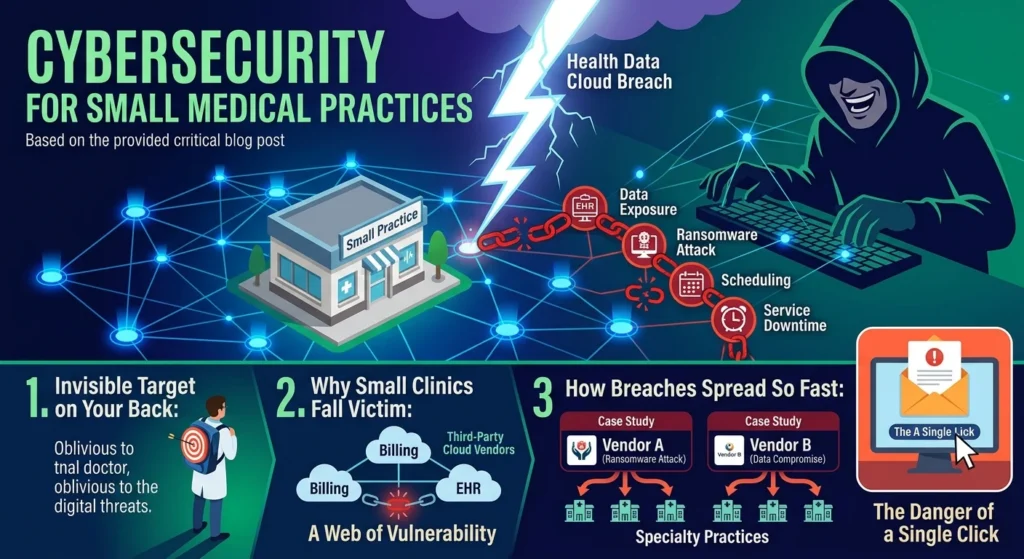
Why You Have an Invisible Target on Your Back
If you run a small medical clinic, you probably think hackers only care about massive hospital networks. After all, why would a sophisticated cyber gang waste time on a local chiropractor or a family practice? But here is the reality. Small clinics are actually the perfect entry point for today’s hackers.
A major health data cloud breach isn’t just a big-hospital problem anymore. In fact, one compromised vendor can trigger a domino effect hitting dozens of independent practices. Suddenly, thousands of patient records are out in the open. It’s a quiet crisis. And it’s completely changing how small practices have to handle digital security.
Why Small Clinics Keep Falling Victim to a Health Data Cloud Breach
A lot of independent practices lean heavily on third-party cloud vendors for the day-to-day stuff. Billing, scheduling, and electronic health records. Sure, this makes running your clinic a whole lot easier. But it also creates a massive web of vulnerability. When one of those third-party vendors gets hit by a health data cloud breach, every single clinic on their roster gets dragged right into the line of fire.
How a Health Data Cloud Breach Spreads So Fast
We’re watching this play out in real time. Just recently, major billing and practice management vendors like CareCloud, Craneware, and Unlimited Systems got hit hard by cyber incidents. Take Unlimited Systems, for example. A ransomware attack on their hosted datacenter exposed the sensitive info of over 442,000 patients. That affected dozens of specialty practices. When those cloud platforms go down, your patient data goes down with them. And it doesn’t even matter if your local office computers are perfectly clean.
The Danger of a Single Click
Not every breach starts with some massive cloud vendor getting hacked. Sometimes, the weak spot is as simple as an email sitting in your inbox. Look at what happened to Midwest Spine Associates, a multi-provider chiropractic clinic. One staff member clicked a bad phishing link, a common mistake that highlights why you should learn how to spot an email scam before it is too late. That was all it took to hand attackers the keys to the network. Within days, ransomware locked up the clinic’s entire patient record system, leaving the staff scrambling to understand exactly what to do when your business experiences a ransomware attack. The records of 8,500 patients were stolen. This isn’t just some hypothetical scare tactic. It’s an incredibly expensive reality happening to small clinics every single week.
The Real Cost of a Health Data Cloud Breach for Your Clinic
Think your standard business insurance policy will cover the fallout of a cyber attack? Think again. A lot of clinic owners have no idea that standard policies usually cap data breach payouts incredibly low. Sometimes as low as $25,000. That is a drop in the bucket compared to the actual price tag of a real breach.
So, what does that mean for your bottom line? According to industry reports, healthcare is still the most expensive sector for data breaches. Average incident costs easily hit the millions. For a small clinic, those expenses pile up fast, which is why many owners are turning to flexible IT services for small business owners to better manage their digital risk. Here is what you’re looking at:
- Forensic investigations: You have to hire expensive cybersecurity experts to figure out exactly how the hackers got in and what data they actually took.
- Legal fees: You’ll need lawyers to help you handle state and federal notification laws, plus all those strict HIPAA compliance rules.
- Patient notifications: You have to pay to mail letters to every single affected person. Plus, you usually have to foot the bill for their credit monitoring services.
- Reputational damage: The trust you spent decades building up in your local community can disappear overnight.
How to Protect Your Clinic from a Cloud Security Disaster
Now, here is where the rubber meets the road. You don’t need a multi-million dollar IT department to lock down your practice. But you absolutely need to take proactive steps today. Just sitting back and hoping you fly under the radar is a recipe for total disaster.
1. Audit Your Cloud Vendors
Do you actually know where your patient data lives? Ask your software vendors about their security protocols. Make sure they have heavy-duty encryption, regular third-party audits, and a rock-solid incident response plan. If a vendor stutters or can’t explain exactly how they protect your data, it’s time to find a new vendor.
2. Set Up Isolated Backups
If ransomware hits your system, a backup drive plugged straight into your main network won’t save you. Hackers will just encrypt that backup first. You have to keep a backup system physically isolated from your daily network. Whether it’s entirely offline or strictly cloud-isolated, this is your ultimate safety net.
3. Train Your Staff Constantly
Your employees are your first line of defense. But they can also be your biggest liability. Sure, annual HIPAA training is legally required. But it is nowhere near enough to stop a modern phishing attack. You need to roll out regular, bite-sized phishing awareness training. Teach your staff exactly how to spot a shady email before they ever click the link.
4. Buy Standalone Cyber Liability Insurance
Do not rely on your basic business owner policy for this. Talk to your insurance broker about getting a dedicated, standalone cyber liability policy. This coverage needs to handle first-party expenses, like forensic teams and ransomware demands. But it also needs to cover third-party liabilities, like patient lawsuits and heavy regulatory fines.
Moving Forward with Confidence
The threat of a health data cloud breach isn’t going away anytime soon. But it doesn’t have to spell the end of your practice. By understanding exactly how these breaches happen and taking small, deliberate steps to lock down your systems, you can protect your patients and your livelihood. Don’t wait until a ransom note pops up on your screen to start taking this seriously.