(302) 262 8484
Hackers Just Shut Down an Entire Water Plant: The Wake-Up Call We Can’t Ignore

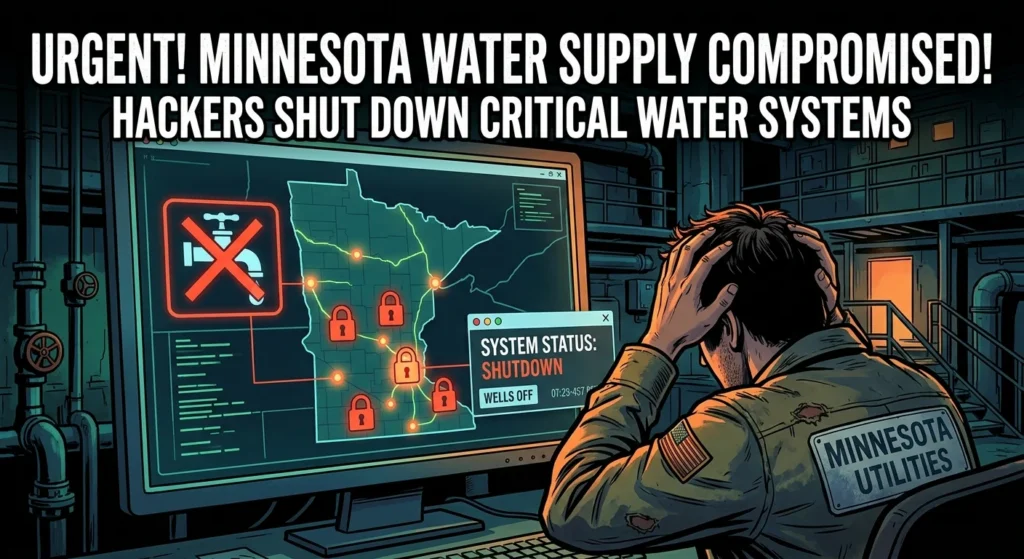
Imagine turning on your kitchen faucet and getting nothing but a dry hiss because hackers shut down an entire water plant. It sounds like the plot of a cheap Hollywood thriller, but it just became a terrifying reality for residents in Minnesota. In a highly coordinated cyberattack, malicious actors targeted over thirty community water systems across the state, proving that our critical infrastructure is far more vulnerable than we like to admit.
How Hackers Shut Down an Entire Water Plant in Minnesota
The small town of Braham, Minnesota, became the ground zero for this digital assault. On a quiet Monday morning, a water plant operator noticed a major problem: the city’s water tower needed to draw in water, but the well pumps were completely unresponsive. The power was still on, but the computerized operating systems telling the water where to go were entirely dead.
Officials quickly realized the truth. Hackers had breached the system, disabled the automated controls, and literally turned the well off. The city had to scramble, immediately warning residents to limit their water use to avoid draining the local water tower’s limited reserves.
Here’s the thing: while Braham was the only town forced to take its entire plant offline, the attack was part of a massive, state-wide campaign. Dozens of other communities reported similar disruptions to their automated utility controls, forcing workers to switch to manual operations to keep the water flowing.
The Shocking Scope of the Coordinated Attack
According to Minnesota IT Services, the state’s technology bureau, the hackers launched a coordinated campaign targeting operational technology across more than thirty water utilities. This was not a random script kiddie looking for a thrill, but rather a sophisticated operation that underscores why businesses should invest in professional IT Consulting to harden their defenses. It was a calculated, simultaneous strike on the systems that keep our society running.
In the suburb of Plymouth, the attack targeted cellular communications linked to two water towers and multiple wastewater lift stations. In other towns like Maple Plain and South St. Paul, automated controls were disrupted, prompting Maple Plain to declare a local state of emergency just to manage the response.
Fortunately, water quality was not compromised, and local crews managed to contain the damage before a full-blown public health crisis erupted. But we might not get so lucky next time, especially if organizations fail to implement comprehensive Ransomware Removal in Delaware and other preventative security measures.
Why Did the Hackers Shut Down Water Plant Controls?
So what does that mean for you? While federal and state investigators are still digging into the details, the attack fits a growing and dangerous pattern. Security experts point out that the timing and methods are highly consistent with state-sponsored threat groups, particularly those linked to Iran, which have been actively targeting industrial control systems across the United States, highlighting the urgent need for robust Small Business Cybersecurity Protection.
These attackers look for specific hardware, such as programmable logic controllers, that manage physical processes. By manipulating these devices, hackers can disable shutdown alarms, change chemical levels, or turn off pumps, which is why organizations must prioritize Proactive IT Monitoring for Small Business to detect unauthorized access early.s entirely. It’s a digital weapon designed to cause physical chaos.
The Lazy Security Mistakes Plaguing Our Utilities
Now, this is where it matters. How did these attackers get in so easily? The hard truth is that many small municipal water facilities are running on outdated, insecure setups. In many cases, critical equipment is connected to the open internet via cellular networks without even a basic virtual private network, or VPN, for protection.
It’s a classic case of letting operational convenience override basic security. When you let facilities managers make major networking decisions in a vacuum, best practices get skipped. Hackers don’t even need sophisticated tools when the front door is left unlocked.
Most vulnerable water systems suffer from a few common security failures:
- Exposed Control Interfaces: Human-machine interfaces left accessible directly from the public internet without multi-factor authentication.
- Lack of Network Segmentation: Keeping administrative office networks and physical water control networks on the same basic system.
- Unsecured Cellular Endpoints: Using cellular modems to monitor remote pumps without encrypting the connection.
- Default Credentials: Failing to change the factory-set passwords on industrial control hardware.
Securing Our Most Critical Resource
If we want to stop the next major outage, municipal governments must treat cybersecurity as a physical safety issue. We need to isolate critical management infrastructure and ensure that control systems can never be accessed directly from the public internet. If you want to learn more about protecting industrial networks, see our guide on OT cybersecurity best practices.
This coordinated attack in Minnesota is a loud, clear warning. Our water systems are in the crosshairs, and we’re running out of time to patch the holes.