(302) 262 8484
The Five-Dollar Threat: How Cheap DDoS Attacks Can Ruin Your Business

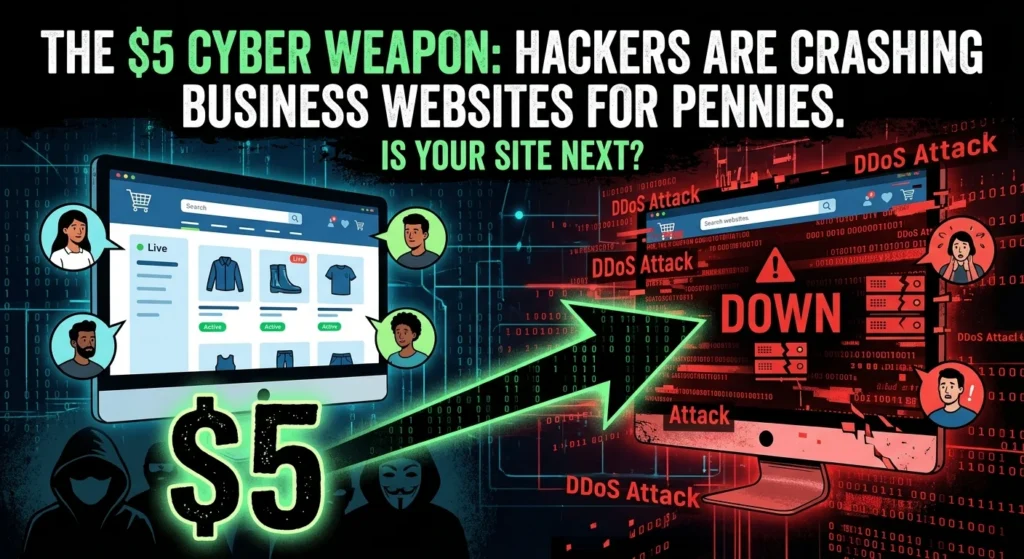
Imagine waking up to find your online storefront completely dark, your customers locked out, and your support inbox overflowing with angry emails. You might think a sophisticated, state-sponsored cyber attack is to blame, but the reality is much more chilling. Today, hackers can crash your business website for just five dollars, using cheap, readily available tools that require absolutely zero technical skills.
The Rise of the Five-Dollar Cyber Weapon
For years, launching a cyber attack required deep technical knowledge and complex coding. Now, the dark web and underground marketplaces have commoditized cybercrime. You do not need to know how to write a single line of code to take down a multi-million dollar business.
These cheap attacks are powered by what the cybersecurity industry calls booter or stresser services. Originally marketed under the guise of legitimate network testing tools, these platforms are actually DDoS-for-hire marketplaces. For the price of a fancy cup of coffee, anyone with a grudge can rent a botnet, a network of malware-infected computers, and point it directly at your website.
Here is the thing. It is so cheap because the supply of infected devices is massive. With millions of insecure smart home devices and outdated routers connected to the internet, building a giant botnet has never been easier for cybercriminals.
Why Hackers Can Crash Your Business Website for Just Five Dollars
It sounds too cheap to be true, but the economics of the underground market are brutally efficient. Because these booter services operate at scale, they can offer devastating attacks for pennies on the dollar. A basic five-dollar subscription can buy enough malicious traffic to overwhelm a standard business website for several hours.
So what does that mean for you? If you run an e-commerce shop, a booking platform, or even a local service website, you are a potential target. It does not take a mastermind to ruin your week. It could be a disgruntled former employee, a ruthless competitor, or just a bored teenager looking for some cheap chaos.
Now, this is where it matters. The damage of a website crash goes far beyond a temporary outage. The true cost of a DDoS attack includes:
- Lost revenue: Every minute your site is down, potential sales vanish forever.
- Reputational damage: Customers lose trust in your brand when they see a “Connection Timed Out” error.
- Mitigation expenses: Hiring emergency IT support to clean up the mess is incredibly expensive.
- SEO penalties: If search engine crawlers cannot access your site while it is down, your search rankings can take a serious hit.
The Illusion of Safety and the Law Enforcement Battle
You might wonder why the police do not just shut these services down. They try. In fact, major international operations like Operation Power Off have successfully seized dozens of booter domains and arrested key administrators. The FBI and global allies regularly take down the biggest players in the DDoS-for-hire market.
But cutting off one head only causes two more to grow. The underground market is incredibly resilient. When one marketplace goes down, new platforms emerge within days, often offering polished dashboards, API access, and even 24/7 customer support. It is a highly professionalized, corporate-style industry operating in the shadows.
Relying on law enforcement to protect your specific website is a losing strategy. You have to take your defense into your own hands.
How to Protect Your Website from Budget Attacks
Leaving your website unprotected is a massive gamble, especially when the barrier to entry for attackers is this low. Fortunately, you do not need a massive enterprise budget to defend yourself.
The best approach is to set up a robust defense before an attack ever happens. Here are the steps you should take right now:
- Use a Content Delivery Network: Services like Cloudflare or Akamai act as a shield, absorbing the massive wave of fake traffic before it ever reaches your server.
- Monitor your traffic patterns: Keep an eye out for sudden, unexplained spikes in visitor numbers, which are often the warning signs of a dry-run attack.
- Choose a secure hosting provider: Make sure your web host offers built-in DDoS protection and has a clear plan for handling sudden traffic surges.
- Keep your software updated: Hackers often exploit outdated plugins and server vulnerabilities to make their attacks even more destructive.
If you want to dive deeper into securing your digital assets, see our guide on web security best practices.
At the end of the day, a five-dollar attack should not be enough to take down your business. By taking a few proactive security measures, you can make sure that your website remains online, your customers stay happy, and those cheap hacking tools remain completely useless against you.