(302) 262 8484
Why Your Antivirus Doesn’t Catch Everything

We all want to install a program, click a button, and never worry about hackers again. It is a comforting thought. But the reality of modern cybersecurity is a lot messier. The hard truth is that your antivirus doesn’t catch everything, which is why professional [Malware Removal Service in Delaware] is often necessary. Relying on a single piece of software to protect your digital life is like locking your front door but leaving all the windows wide open.
Security software is absolutely necessary. You should never connect a computer to the internet without it. However, treating it as an invincible shield is exactly what gets people into trouble.
The limits of traditional scanning
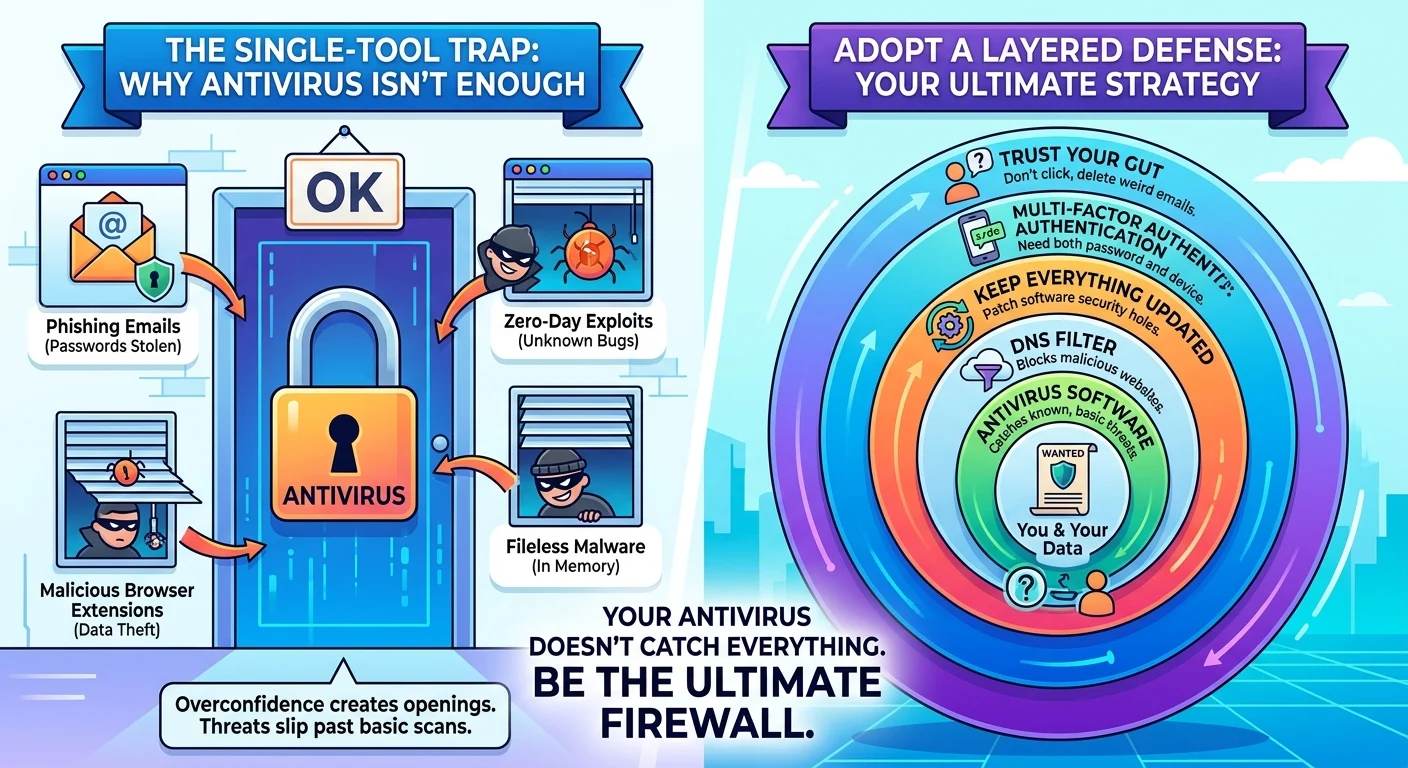
Most basic security programs rely on something called signature-based detection. Think of it like a digital wanted poster. If a malicious file matches a known threat in the database, the software blocks it immediately.
Here is the problem with that approach. Hackers create thousands of new malware variants every single day. If a threat is brand new, there is no wanted poster for it yet. Your software will look right at a dangerous file and let it walk straight through the front door.
Threats that easily bypass basic protection
So what exactly slips through the cracks? A lot more than you might think.
- Phishing emails: A fake login page for your bank does not contain malicious code. It just tricks you into handing over your password voluntarily.
- Zero-day exploits: These are sophisticated attacks that target unknown vulnerabilities in software before the developer even has a chance to fix them.
- Fileless malware: This sneaky attack operates entirely in your computer’s memory. It leaves no actual files behind for a traditional scanner to find.
- Malicious browser extensions: You might install a handy tool to block ads or track prices. Sometimes these extensions quietly harvest your browsing data in the background.
The Danger of a False Sense of Security
People act very differently when they think they are completely safe. You might download a sketchy email attachment or click a strange link simply because you assume your security software will save you if things go wrong. This overconfidence is exactly what cybercriminals count on.
I see this happen all the time. A business installs a popular security suite and immediately stops training their employees on basic internet safety. That is a massive recipe for disaster. See our guide on [employee security training] to understand why human awareness matters so much more than software.
What to Do Since Your Antivirus Doesn’t Catch Everything
You do not need to panic. You just need to change your strategy and consider [Small Business Cybersecurity Protection] to stay ahead of threats. Moving away from a single point of failure makes you a much harder target for attackers.
Adopt a layered defense approach
Security professionals call this defense in depth. If one layer fails, another is there to catch the threat before it causes real damage.
- Turn on multi-factor authentication: Even if a hacker steals your password through a clever phishing link, you should know the [Immediate Steps to Take If You Clicked a Phishing Link] to protect your account. phone.
- Keep everything updated: Software updates patch the exact security holes that zero-day exploits try to use against you.
- Use a DNS filter: This intercepts your web traffic and blocks access to known malicious websites before your browser even tries to load them.
- Trust your gut: If an email looks weird or an online offer seems too good to be true, just delete it.
Antivirus software is still a vital tool in your toolkit. You absolutely should use it to catch the obvious stuff. Just remember that it is only one piece of a much larger puzzle. At the end of the day, you are the ultimate firewall.