(302) 262 8484
Did You Use 23andMe? You Need To Check This NOW

The Shocking Reality: What Just Happened to 23andMe?
If you ever spit into a plastic tube and sent it off to get your ancestry analyzed, you need to pay close attention. Did you use 23andMe at any point over the last few years? If so, your most sensitive genetic information might have been floating around the dark web, and the legal fallout is reaching a boiling point right now.
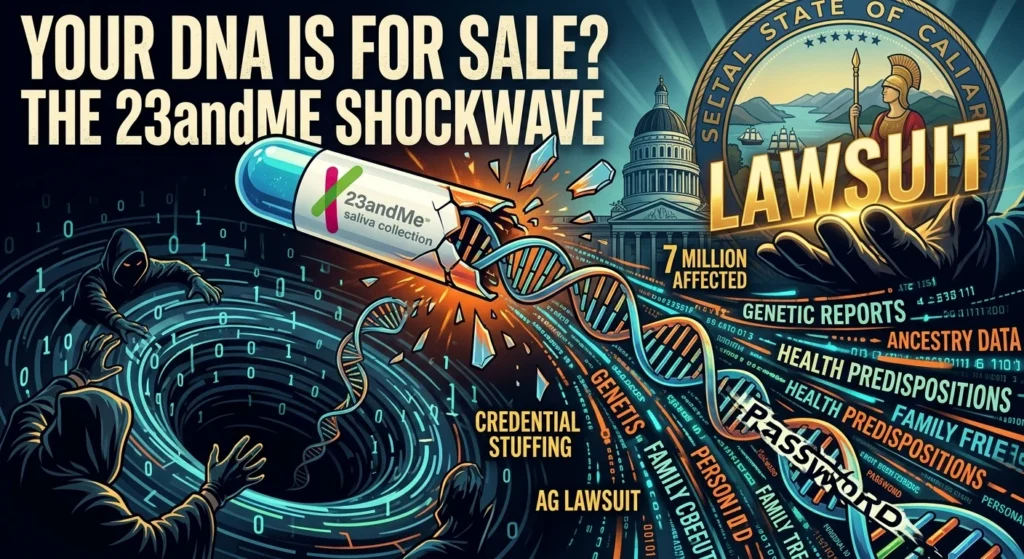
In late May 2026, California Attorney General Rob Bonta filed a massive lawsuit against Chrome Holding Co., the company formerly known as 23andMe. The state alleges that the genetic testing giant failed to implement reasonable security measures, ignored glaring red flags for months, and misled the public about a catastrophic data breach that compromised the personal and genetic information of nearly 7 million people.
Here is the thing. This is not just another corporate lawsuit; it is a stark reminder of why hackers love small businesses and large corporations alike. It is a wake-up call about who owns, protects, and potentially sells your biological blueprint.
Why the 23andMe Data Breach Is Far More Dangerous Than a Normal Hack
When we think of a data breach, we usually worry about credit card numbers or leaked email addresses. You can cancel a credit card. You cannot cancel your DNA.
The 23andMe data breach, which began in April 2023 and went undetected for five months, allowed hackers to access the ancestry and health data of roughly 6.9 million users. Hackers used a technique called credential stuffing, exploiting the fact that many users reused passwords from other websites, which is why understanding the reality of modern data privacy is so critical. But the state’s lawsuit alleges the company missed obvious warning signs, including a massive spike in successful logins that should have triggered immediate alarms.
Worse still, the stolen data was not just sitting on a server. Bad actors specifically compiled targeted lists of users with Chinese and Ashkenazi Jewish ancestry and offered them for sale on dark web hacking forums. The sheer vulnerability of having your genetic predispositions, health reports, and family connections exposed is unprecedented.
Corporate Drama: Bankruptcy, Restructuring, and Your DNA
So what does that mean for you and your data privacy? The corporate structure of 23andMe has completely fractured over the past year, leaving many users wondering who actually has their genetic code.
Facing a mountain of lawsuits and falling demand, 23andMe filed for Chapter 11 bankruptcy in March 2025. As part of that process, the company restructured and rebranded as Chrome Holding Co. Soon after, a nonprofit public benefit corporation called the TTAM Research Institute, controlled by 23andMe co-founder Anne Wojcicki, acquired the company’s assets for over $300 million.
Now, this is where it matters. When a biotech company goes bankrupt and sells its assets, your data is often part of the deal. While regulators have stepped in to ensure some privacy protections, the shifting of ownership highlights a terrifying reality. When you hand over your DNA, you lose ultimate control over where it ends up when a company goes under.
What You Need to Do Right Now
If you are one of the millions of people who used the service, you cannot afford to ignore this situation. You need to take active steps to protect your digital and genetic identity immediately.
- Change your password immediately: If you still have an active account, change your password to something completely unique. Never reuse passwords across different platforms.
- Enable two-factor authentication (2FA): This adds an extra layer of security that makes credential-stuffing attacks incredibly difficult for hackers to pull off.
- Check your settlement status: A federal judge approved a class-action settlement between $30 million and $50 million in January 2026. If you received a breach notification, you might be eligible for a payout.
- Consider deleting your account: You can request that the company delete your account and discard your physical saliva sample. It is a smart move if you no longer use the service.
The Settlement: Is There Money Waiting for You?
Many affected users are wondering if they can get financial compensation for this massive privacy failure. The short answer is yes, but the clock is ticking.
The approved class-action settlement provides up to $10,000 for extraordinary claims, such as documented identity theft or serious hardships resulting from the breach. For average users who simply had their data compromised, smaller cash payouts and free security monitoring services are on the table. If you received an official email notification about the cyber security incident, you should check the official settlement portal to submit your claim.
The Future of Genetic Privacy
At the end of the day, home DNA kits offered a fun way to discover our roots and learn about our health. But the trade-off has proven to be incredibly steep. We must think twice before handing over our most intimate medical and biological data to private corporations.
How to Protect Yourself After the 23andMe Data Breach
We highly recommend being extremely cautious about uploading your raw genetic files to any open-access genealogy sites, as this only spreads your data further across the web. If you do choose to use these services, make sure you opt out of sharing your data with third-party researchers and regularly review your privacy settings.
For more tips on keeping your personal information safe online, check out our guide on digital privacy and securing your online accounts. Your genetic code is the most unique thing about you. It is time to start treating it that way.